
* All product/brand names, logos, and trademarks are property of their respective owners.
There are some trips you remember for the destination, and then there are the rare ones you remember for everything that happened along the way. This was one of those journeys.
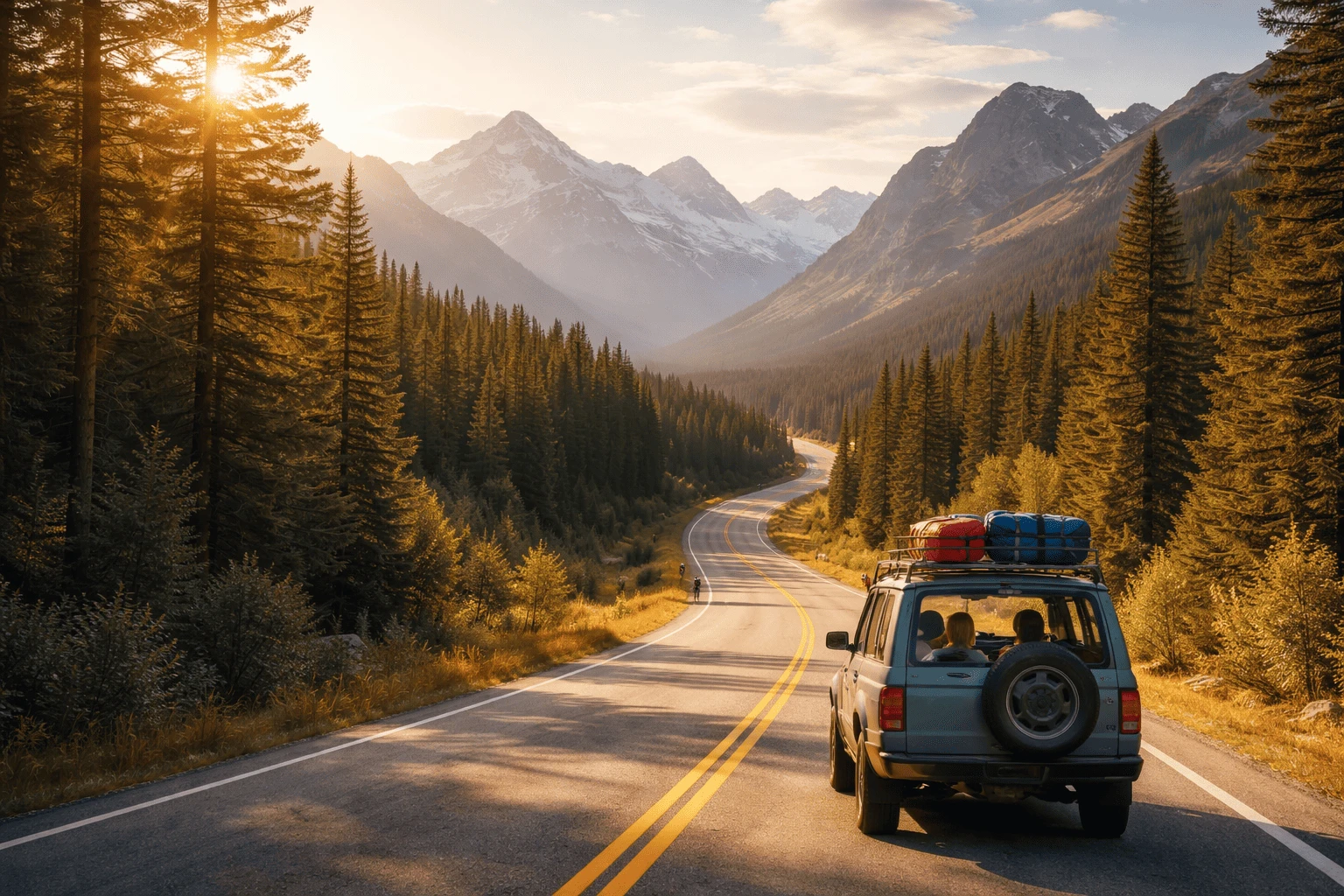
It was supposed to be a simple road trip. A few bags in the back seat, a playlist downloaded in advance, snacks packed for the long drive, and a destination already pinned on the map. The plan felt clear enough. Drive for hours, stop when needed, take photos when the views become impossible to ignore, and finally arrive where we had been trying to go all along.
But somewhere between leaving the city behind and entering the silence of the mountains, the idea of the trip began to change.

The destination still mattered, of course. It gave us a reason to begin. But as the road stretched forward, winding through valleys, villages, rivers, and endless skies, it became clear that the real beauty of the journey was not waiting at the end. It was already happening, mile by mile.
Every road trip begins with a strange kind of excitement. It starts before sunrise, when the streets still feel half-asleep and the city has not yet become loud. There is something special about leaving early, watching familiar roads slowly turn unfamiliar, and feeling the weight of routine disappear behind you.
At the start, nothing seems life-changing. You are still thinking about practical things — whether you packed everything, whether the fuel is enough, whether the route you chose is actually the best one. Conversations are light. The playlist is doing most of the work. There is movement, but not yet transformation.
Then gradually, the city fades. Buildings become smaller. Traffic becomes lighter. The air begins to feel different. Even the silence between conversations starts to feel calmer. And without realizing it, you stop rushing.

That is the first gift of a long drive. It teaches you to slow down, even if you did not intend to. You stop checking the time as often. You stop thinking only in terms of arrival. You begin to notice what is around you — fields glowing in the early light, tea stalls coming to life, children waving from roadside shops, trucks painted like moving art, and mountains appearing slowly in the distance like they were never in a hurry to be seen.
The road does not demand attention in the same way the city does. It invites it.
No one talks enough about how the best parts of a road trip are usually the ones you did not plan.
The destination gets all the attention before the journey begins. You research it, imagine it, and talk about it. But on the road, the moments that stay with you most are often accidental — the five-minute stop that turns into half an hour, the roadside chai that tastes better than any café in the city, the nameless viewpoint where everyone goes quiet at once.

We stopped more times than we expected. Some were practical. Some were because the road ahead looked too beautiful not to pause. At one point, it was just for tea. At another, it was because the sky looked different and no one wanted to miss it.
Those stops changed the trip.
They made space for conversation, laughter, and stillness. They turned the journey from a drive into an experience. Without them, we would have arrived faster, but we would have missed the feeling of being truly present.
That is something the road teaches well. In everyday life, we often want every action to lead somewhere productive. But travel, especially by road, reminds you that sometimes a moment can be valuable simply because you lived it fully.
A roadside bench, a cold breeze, a quiet cup of tea, and a view that makes you forget to check your phone — these things may not sound important when written down, but they often become the most meaningful parts of the trip.
There is a moment in every mountain journey when the landscape begins to take over your thoughts.
At first, you are only driving through it. Then suddenly, it feels like it is driving you inward, toward something quieter and deeper.

Mountains have a way of making everything feel smaller in the best possible sense. Your plans feel lighter. Your worries feel less urgent. Even conversations become softer. You start looking out the window more and saying less, not because there is nothing to say, but because the view is enough.
The road curves differently there. The air feels sharper. Rivers move beside you with a confidence that makes your own pace feel unnecessary. You realize that nature does not rush, and yet it reaches everywhere it needs to go.
One of the most beautiful things about being on the road in the mountains is that silence changes. In the city, silence can feel awkward or incomplete. On a mountain road, it feels full of meaning.
You look outside and understand things you cannot easily explain. Maybe it is peace. Maybe it is perspective. Maybe it is just the rare experience of being fully present without trying.
Somewhere between the roads and the mountains, the journey stops being about movement and starts becoming about feeling.
Road trips are not just about landscapes. They are also about the people who briefly become part of your story.
There is the man at the roadside dhaba who recommends the best tea without being asked. The shopkeeper who tells you which road has the better view. The stranger who smiles like you are already familiar because travelers all belong to the same temporary world.
These are small interactions, but they leave a mark. They remind you that travel is not only about seeing places. It is also about encountering warmth in simple forms.
If you travel with others, the road reveals people in beautiful ways. Long drives bring out stories that never come up at dinner tables. Jokes become funnier. Silences become more comfortable. Even minor inconveniences turn into memories you will laugh about later.
And if you travel alone, the road gives you something equally valuable: a different kind of company. Your thoughts become clearer. Your observations become sharper. You start listening to yourself more carefully.
Either way, the road gives you a version of connection that everyday routines rarely make space for.
At some point during the trip, I realized I was no longer thinking much about the destination.
That surprised me.
We were still heading somewhere beautiful. We still wanted to arrive. But the emotional center of the journey had shifted. What mattered now was not only where we were going, but how deeply we were experiencing everything in between.
Long drives are not always smooth. There are delays, wrong turns, patchy signals, unexpected traffic, and moments when the road seems longer than expected. But even those become part of the experience.
The journey reminds you that not everything has to happen quickly to be worth it. Some things become beautiful precisely because they take time.
Modern life trains us to keep moving toward the next thing. The next task. The next goal. The next destination.
But the road gently asks a different question: what if this moment is already enough?
That question stays with you. Maybe that is why road trips feel so personal. They do not just take you to a place. They return you to the parts of yourself that get buried under deadlines, noise, and routine.
And yes, eventually, we arrived.
The destination was beautiful, just as we had hoped. The air was colder, the views wider, and the sense of arrival satisfying in its own quiet way. We took the photos we had imagined. We stood where we had planned to stand. We enjoyed the stillness we had driven for hours to find.
But something had changed by then.
Usually, reaching the destination feels like the high point of a journey. This time, it felt more like a gentle pause in a longer story. Beautiful, yes. Memorable, definitely. But not the whole point.
Because the truth was already obvious by then: the best part had not been waiting for us at the end. It had been with us all along.
It was in the changing light on the road, the tea stops, the silence, the laughter, the turns we did not expect, and the mountain views that made us go quiet. It was in the feeling of moving through the world without rushing it.
“The Journey Was Better Than the Destination” sounds like a poetic line until you actually live it.
Then it becomes true in the simplest way.
Sometimes the destination is just an excuse to begin. The real story unfolds in the miles between where you start and where you think you are going. It lives in the pauses, the roadside conversations, the changing landscapes, and the quiet realization that not everything meaningful waits at the end.
Some things are only found along the way.
And maybe that is why the best journeys stay with us for so long. Not because of where they ended, but because of how they made us feel while we were still moving.
If you’re already planning your next family adventure, don’t miss our guide to the best travel destinations for families in Pakistan—because some journeys are even better when shared.

I am Zeenat, an SEO Specialist and Content Writer specializing in on-page and off-page SEO to improve website visibility, user experience, and performance.
I optimize website content, meta elements, and site structure, and implement effective off-page SEO strategies, including link building and authority development. Through keyword research and performance analysis, I drive targeted organic traffic and improve search rankings.
I create high-quality, search-optimized content using data-driven, white-hat SEO practices, focused on delivering sustainable, long-term growth and improved online visibility.
Be the first to share your thoughts
No comments yet. Be the first to comment!
Share your thoughts and join the discussion below.


